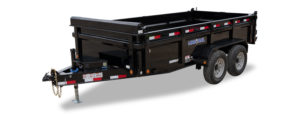
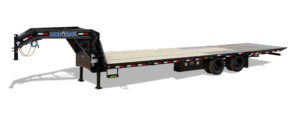
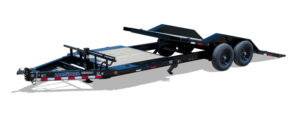
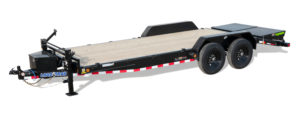

A Load Trail trailer is built to last. But “built to last” doesn’t mean “built to ignore.” Like any piece of working equipment, a trailer performs best — and lasts longest — when it gets regular attention. The good news is that most trailer maintenance is straightforward: it doesn’t require a shop, it doesn’t take all day, and catching a small issue early almost always costs less than dealing with it on the side of a highway.
Here’s a practical maintenance schedule broken down by frequency.
Before Every Haul: The Pre-Trip Walk-Around
Before you hook up and pull out, take three minutes to walk around the trailer. It’s not a full inspection — it’s a quick check for anything obviously wrong.
Tires: look for low pressure, visible damage, or uneven wear. Trailer tires hold pressure differently than truck tires and can drop significantly between uses without being obvious until you’re on the road.
Lights: plug in and verify all running lights, brake lights, and turn signals are working. A blown trailer light is an easy fix in your driveway. On the road, it’s a ticket and a hazard.
Coupler and safety chains: confirm the coupler is fully seated and locked, safety chains are crossed and secured, and the breakaway cable is attached to your truck.
Load distribution: check that your load is balanced front-to-back and side-to-side before you pull out. Uneven loads cause handling problems and put uneven stress on the frame and axles.
Once a month — or more frequently if you’re hauling daily — do a slightly deeper check on the components that wear the fastest.
Monthly: Tires, Brakes, and Connections
Tire pressure and condition: inflate to the rated PSI on the sidewall, not your truck’s door placard. Check tread depth and look for sidewall cracking, which indicates aging rubber that’s approaching replacement time regardless of tread remaining.
Electric brake function: if your trailer has electric brakes, apply them manually with the brake controller while stationary to confirm they’re engaging. Brakes that feel soft or inconsistent need adjustment or inspection before your next haul.
Electrical connections: inspect the 7-way plug and the trailer-side socket for corrosion, bent pins, or damaged wiring. Corrosion on the pins is the most common cause of intermittent lighting problems.
Wheel lug nuts: check torque on all lug nuts. New trailers and recently removed wheels should be retorqued after the first 50–100 miles and periodically thereafter. Load Trail provides a torque spec on the trailer — follow it.
Quarterly: Bearings, Brakes, and Undercarriage
Every three months, or at the start and end of heavy-use seasons, go deeper on the components that carry the most load and the most consequence if they fail.
Wheel bearings: jack the trailer and check each wheel for play — grab the tire at 9 and 3 o’clock and try to rock it. Any lateral movement indicates bearing wear. Spin the wheel by hand and listen for grinding or roughness. Bearings that are warm to the touch after a haul are running hot and need immediate inspection.
Brake adjustment: electric brakes wear over time and need periodic adjustment to maintain proper contact between the brake shoe and drum. Most brake adjusters are accessed through the back of the brake drum — turn until you feel drag, then back off slightly. If you’re not comfortable adjusting brakes, your Load Trail dealer can do it during a service visit.
Frame and weld inspection: get underneath the trailer with a flashlight and look at the frame welds, crossmembers, and any area where components bolt or weld to the main frame. Fresh cracks, rust buildup at weld points, or bent crossmembers all need attention before the trailer goes back to work.
Ramps and hinges: if your trailer has fold-down ramps or a tilt bed, check the hinges and pins for wear, and lubricate with a penetrating oil or grease. Ramps that bind or hinge pins that are loose both create safety risks during loading and unloading.
Annually: Full Inspection and Powder Coat Touch-Up
Once a year — ideally before your heaviest-use season — do a comprehensive inspection that covers everything above plus the items that don’t need attention as frequently.
Full brake inspection: pull the drums and inspect brake shoes, magnets, and drums for wear beyond service limits. Replace any components that are at or near their wear limit rather than waiting for them to fail mid-season.
Axle alignment check: if your trailer is tracking to one side or showing uneven tire wear on one axle, have the axle alignment checked. Misaligned axles accelerate tire wear and can cause handling problems under load.
Powder coat touch-up: inspect the finish for chips, scratches, or areas where the coating has worn through to bare metal. Touch up any exposed metal with a matching spray or have the trailer re-coated in problem areas. Load Trail’s powder coat process includes a 6-step pretreatment that gives the coating excellent adhesion, but any penetration to bare metal will rust if left unaddressed.
DOT compliance review: if your trailer operates on public roads (which most do), verify that it meets current DOT requirements for lighting, reflectors, tire rating, and brake functionality. Requirements can change, and an annual review keeps you current.
Deck and flooring inspection: wood decking softens over time, especially in areas that take repeated impact from loading. Probe with a screwdriver to check for soft spots, and replace individual boards or full decking sections as needed. Compromised decking is a load security and safety issue.
Keep a Log
The simplest thing you can do to stay on top of trailer maintenance is keep a log — a note on your phone, a notebook in the truck, a spreadsheet, whatever works. Record the date, mileage if applicable, and what you checked or replaced. When something goes wrong, the log tells you when things were last serviced. When you sell the trailer, it adds value to have documented maintenance history.
Parts and Service
Most Load Trail maintenance items — brake components, bearing kits, light assemblies, deck hardware — are available through Load Trail parts or your local dealer. For anything that requires service beyond basic maintenance, your Load Trail dealer’s service department is the right first call.
